The Power of Autophagy: How Fasting Activates Your Dog’s Natural Healing Intelligence

Reading time approx 5 minutes

As a canine wellness specialist, one of the most incredible processes I share with pet parents is autophagy—a natural cellular “cleanup” system that becomes especially active during fasting. Autophagy isn’t new, a trend, or exclusive to humans. It’s a deeply rooted biological mechanism that has helped animals survive, adapt, and thrive for millions of years.

Let’s explore what autophagy really is, where it comes from, and why it’s so powerful for our dogs.

What Exactly Is Autophagy? A Simple Explanation for Pet Parents

Autophagy (pronounced aw-TAH-fuh-jee) comes from Greek roots:

  • “auto” = self
  • “phagein” = to eat

So the literal translation is: “self-eating”—but in a good way.

Autophagy is the body’s natural process for:

  • Breaking down damaged or faulty cells
  • Clearing out built-up waste and toxins
  • Recycling old cellular material to create new, healthier cells
  • Supporting overall repair and rejuvenation

It’s like your dog’s body has a built-in “spring cleaning mode” that turns on automatically when given the opportunity—especially during fasting.

Where Autophagy Comes From: The Evolutionary Purpose

Autophagy is not modern. It’s ancient biology shared by almost all living organisms on Earth.

A Natural Survival Mechanism

Thousands of years before dogs were domesticated, wild canines experienced cycles of feast and famine. Food wasn’t guaranteed every day. Their bodies evolved a brilliant survival system:

  • Conserve energy
  • Repair damaged tissues
  • Recycle nutrients already inside the body
  • Keep the animal strong, clear-minded, and capable of hunting again

Fasting triggered healing, not weakness. This biological intelligence still exists in every dog today.

The Scientific Discovery

Although autophagy evolved long ago, it gained scientific spotlight when Dr. Yoshinori Ohsumi won the 2016 Nobel Prize in Physiology or Medicine for uncovering the mechanisms behind it. His research revealed how fasting and cellular stress activate this powerful internal cleanup system.

In his foundational experiments using yeast, Ohsumi showed that nutrient deprivation triggers autophagy, enabling cells to recycle damaged components, a process now understood to occur across many species, including mammals. See study here: https://pubmed.ncbi.nlm.nih.gov/1400575/

Long before modern science named it, humans and animals alike relied on fasting to support the body’s natural healing. The wisdom behind fasting stretches back through ancient cultures, classical healers, and early natural health pioneers who understood the body’s self-healing capacity long before we had the scientific language to describe it.

Ancient Roots of Fasting and Self-Healing

For thousands of years, fasting has been used as a natural way to restore balance and support the body’s healing. Ancient civilizations observed that animals fast when unwell, and humans instinctively followed the same pattern.

Across traditions—Hinduism, Buddhism, Christianity, Judaism, and Islam—fasting was embraced as a method of cleansing, clarity, and physical renewal.

Classical Healers Who Understood Fasting’s Power

Even in early medicine, great thinkers recognized the healing potential of digestive rest:

  • Hippocrates (460–370 BC) noticed that sick animals refuse food and encouraged fasting for recovery.
  • Plutarch (AD 46–120) famously stated, “Instead of using medicine, better fast today.”
  • Pythagoras (570–495 BC) used fasting to sharpen the mind and strengthen the body.

Though they didn’t know the term “autophagy,” they clearly witnessed its effects.

Early Natural Hygiene Pioneers

In the 1800s, natural healers revived fasting as a therapeutic tool:

  • Sylvester Graham (1794–1851) promoted simple eating and periodic fasting for longevity.
  • Russell Thacker Trall, MD (1812–1877) taught that the body heals itself if we remove interference.
  • Isaac Jennings, MD (1788–1874), creator of the “No-Medicine Plan,” believed rest and fasting were far more powerful than drugs.

These early thinkers laid the groundwork for the Natural Hygiene movement.

Modern Fasting Leaders: Herbert Shelton & T.C. Fry

In the 1950s–1980s, Dr. Herbert Shelton brought supervised fasting into modern practice, guiding thousands through therapeutic fasts and emphasizing that healing happens when digestion rests.

In the 1970s and beyond, T.C. Fry expanded Shelton’s teachings, helping people understand that the body is designed to repair itself when given proper conditions: rest, hydration, simplicity, and natural nutrition.

Shelton and Fry intuitively understood the body’s remarkable ability to heal itself through fasting long before the detailed cellular mechanisms were widely known. While the term autophagy had been used in scientific literature since the 1960s, it wasn’t until Dr. Yoshinori Ohsumi’s Nobel Prize-winning research in 2016 that the process was fully explained and recognised in mainstream science. These pioneers observed and applied their effects practically, showing that the body’s natural repair systems had been harnessed long before modern science could describe them in molecular detail.

When we stop overloading the body, it finally has the energy and space to repair itself at the cellular level.

What Autophagy Does for Dogs: Beyond Detox

Autophagy isn’t just about detoxification; it affects almost every system in the body. When activated, it can:

  • Remove damaged cells before they cause trouble
  • Reduce cellular “clutter” that leads to inflammation
  • Help tissues repair more efficiently
  • Support a healthier metabolism
  • Improve cellular energy production
  • Encourage long-term vitality and resilience

Think of it as turning on your dog’s deep healing mode, the one that can only activate when digestion steps aside.

Why Fasting Activates Autophagy So Powerfully

When a dog eats frequently, the body is constantly focused on digestion. Digestive work uses a significant amount of energy, not just physically, but at the cellular level.

When we pause food intake safely and intentionally:

  • Digestive work slows down
  • Insulin drops
  • The body switches from storing to repairing
  • Autophagy ramps up to clean, recycle, and restore

This shift is why therapeutic fasting is an integral part of how I work with dogs.

Why Fasting Is Central to My Healing Approach

In my practice, fasting isn’t simply a technique. It’s a philosophy of healing, built on the understanding that:

The body can heal when we stop overloading it.

By simplifying, slowing down, and giving the body room to breathe, we create space for autophagy and other natural repair processes to do their work.

I believe in:

  • Working with the body, not against it
  • Supporting ancient biological systems rather than overriding them
  • Reducing stressors so the body can shift into repair mode
  • Honouring a dog’s natural rhythms, just like their wild ancestors

Fasting allows us to tap into the deepest, most instinctual form of healing.

Is Fasting Safe for Dogs? Absolutely—When Done Correctly

Many pet parents worry that fasting might feel unkind. In reality, when done thoughtfully and tailored to your dog’s needs, fasting is one of the gentlest tools we can use.

When guided properly, fasting can support:

  • A healthier gut environment
  • Clearer skin and coat
  • Reduced inflammation
  • More stable energy
  • Improved mobility
  • Enhanced long-term wellness

It’s not about restriction. It’s about allowing the body to reset and activate its ancient healing blueprint.

Ready to Support Your Dog’s Natural Healing Potential?

Your dog already has everything it needs inside its body to heal, repair, and thrive. Autophagy simply helps unlock that potential.

If you’re curious about how therapeutic fasting can support your dog, I’d love to guide you.

Book a canine wellness consultation https://canine-wellness-specialist.uk/services-2/

Let’s create a safe, customised fasting and nutrition plan that supports your dog’s natural healing intelligence and helps them feel their best, from the inside out.

The Truth About Starches in Commercial Pet Foods

There’s a huge difference between simple sugars and complex sugars,  and most people have no idea how this affects their dogs!

Commercial pet foods (kibble, tins, even many “premium” brands) are loaded with complex carbohydrates, better known as starches.

👉 “Complex carbs” = polysaccharides

(“Poly” = many, “saccharide” = sugar)

So basically… starches are long-chain sugars — too much unhealthy sugar! 😬

These ingredients — grains, rice, peas, lentils, potatoes, chickpeas, etc. — are used because they’re cheap fillers and help bind kibble together. But just because dogs can survive on them doesn’t mean they thrive on them.

Starches actually rob the body of nutrients. They block proper mineral absorption and over time, can lead to issues like anaemia, dull coats, poor energy, and inflammation.

Insulin and Fat

Insulin is a hormone made by the beta cells in the pancreas. Its main job is to act like a key — it unlocks the door to the cells, allowing sugar (glucose) from the bloodstream to enter and be used for energy.

However, when there’s too much fat circulating in the bloodstream — especially from processed or damaged, unhealthy fats — it can block insulin’s ability to do its job. The fat forms a coating around the cells, making them less responsive to insulin’s signal.

This means glucose can’t enter the cells properly, so it builds up in the bloodstream. Over time, this leads to insulin resistance, which then develops into high blood sugar and eventually diabetes.

We see this in humans, and now the same metabolic issues are showing up in dogs — because their diets have shifted toward the same high-fat, high-starch, ultra-processed foods.

Unfortunately, few studies have been done on dogs, so we often rely on human research to understand these mechanisms.

For anyone curious to learn more, the documentary What the Health (2017) gives a great visual explanation of how dietary fat interferes with insulin function, leading to insulin resistance and diabetes.

🎥 Watch here: What the Health (YouTube)

Now here’s where it gets really interesting

Simple sugars, like the natural sugars in fruit (fructose) and complex sugars (starches) behave completely differently in the body.

✨ Simple sugars — like fructose in fruit — enter cells easily through diffusion.

No insulin needed! This gentle process saves the body energy and fuels the cells directly.

⚡ Starches, on the other hand, require insulin to enter cells. When a dog eats starch, the body breaks those long chains of sugar apart, causing a huge spike in blood sugar, followed by a crash. The leftover undigested starches then ferment in the gut, feeding yeast, candida, and parasites. 👉 You can read about the role and causes of yeast overgrowth here.

And it gets worse…

These sticky starches and processed fats together cause inflammation, acidosis, and chronic strain on the body.

Acid = corrosive.

It breaks down tissues, dehydrates the body, and fuels chronic inflammation.

Over time, this constant strain on the system can show up as:

🐶 Itching & ear ‘infections’

🐶 Yeast overgrowth

🐶 Gut imbalance

🐶 Low energy

🐶 Poor coat & skin

So while many worry about giving fruit because they think it’s “too sugary,” the real issue isn’t simple sugars; it’s the complex starch sugars hidden in processed pet foods.

🍉🍌 Fresh fruits (fed on the right days!) nourish.

🥔🌾 Starches in kibble deplete.

Let’s stop fearing nature’s simple sugars and start questioning the complex ones that don’t belong in our dogs’ bowls 💚

Feeling confused about sugars and starches in your dog’s diet? You’re not alone; so many people have been taught to fear fruit sugars while unknowingly feeding the wrong kinds of sugars hiding in processed foods. I can help you clear up the confusion around sugars, starches, and fats. I can guide you through it step by step. Get in touch today, and let’s make it simple. Real food, real results naturally.

If you’d like to dive a bit deeper into what’s hiding in commercial pet foods, from fillers to synthetic additives. I’ve written a full blog. The Hidden Dangers in Commercial Dog Food
Read the full article

 The Truth About Allergies

Reading time: Approx 5 minutes.

We’ve been told that allergies are a disease, that the body is faulty and overreacts to harmless things like pollen, dust, food, or grass. But here’s the truth: neither our bodies nor our dogs’ bodies are broken. Allergies aren’t mistakes; they’re signals.

The Bucket Effect

Think of the body—human or canine—as a bucket. Every day, things go into that bucket:

  • Chemical exposures (cleaning products, flea treatments, air fresheners, detergents)
  • Over-processed or unsuitable foods (fast food for humans, kibble for dogs)
  • Medications and vaccines
  • Stress and lack of proper rest

That bucket can only take so much. Once it overflows, the body reacts, even to everyday things that normally wouldn’t be a problem. That’s when we see allergies. For humans, it may be sneezing, watery eyes, or hives. For dogs, it’s itchy skin, red ears, or endless paw chewing.

As T.C. Fry explained in Lesson 71 of The Life Science Course, what we call “allergies” are not mysterious diseases at all, but simply the body’s heightened effort to rid itself of toxic waste. Pollen, dust, or foods are not the real culprits; they are innocuous stimuli. If they were truly harmful, every human and every dog would react the same way. Instead, only overloaded bodies respond with symptoms. Sneezing, watery eyes, or itchy skin are signals that the body is actively trying to clear itself, rather than signs that it is broken.

Nora Lenz, founder of the Rotational MonoFeeding approach, calls conventional allergy treatments a “con game,” because they mask symptoms without addressing the real problem: a state of toxemia from dietary and chemical overload. In her article “The Con Game of Allergies,” she explains how repeatedly feeding the same processed foods—like kibble—keeps dogs stuck in a cycle of reactions, pushing disease further instead of allowing the body to heal. The conventional medical system often misunderstands the body’s natural healing capacity and, in doing so, takes the power away from owners to support their pets’ recovery. By rotating fresh, species-appropriate meals, we can help dogs detox, heal the body, and reset, reducing flare-ups, restoring balance, and reclaiming control over their health.

Is It Really Just Genetics?

Many people are told that allergies are purely genetic—that some humans (or some breeds of dogs) are simply “born that way.” But this isn’t the full truth.

Babies and young pups don’t just inherit DNA; they also inherit their mother’s internal state. If the mother’s lymphatic system is backed up with waste from years of poor diet, medications, vaccines, or chemical exposures, her offspring begin life with an already-full bucket. That’s why we see so many puppies with skin problems, itchy ears, or digestive upsets right from the start. You can read more about the lymphatic system and its role in detox 👉 here.

And this doesn’t stop with just one generation. When dogs are fed kibble and other highly processed foods for decades—generation after generation—the burden compounds. Each new generation of puppies carries not only its own mother’s backed-up system but also the accumulated effects of all the generations before.

It’s not that they’re genetically defective; it’s that they’re starting out burdened by what their lineage has been unable to eliminate. The good news? With fresh, species-appropriate foods and reduced chemical exposure, this cycle can be broken.

Why Symptoms Flare With the Seasons

Allergy flare-ups often get worse in spring and summer, or even during sudden weather changes in winter. Here’s why:

  • Innocuous stimuli – bursts of pollen, mould, grasses, or dust. If these were truly harmful, every human and every dog would react, but only overloaded systems show symptoms.
  • Temperature shifts – sudden cold or heat stresses the body, drying skin or stirring up old waste.
  • Cleansing cycles – the body uses seasonal changes as a chance to detox. What looks like hay fever in humans—or gunky ears and skin flare-ups in dogs may actually be elimination at work.

Colds, Flu & Allergies: The Same Truth

We’ve also been told that colds and flu are “caught.” But just like allergies, they are detox events—ways the body clears itself.

  • Runny noses, sneezing, coughing – expelling waste.
  • Fever – the body raising its internal fire to burn off toxins.
  • Fatigue – conserving energy for healing.

It’s no different for our dogs. When they vomit bile, get gloopy eyes, or have a flare of itchy skin, they’re not “catching” something; they’re unloading what their bucket can no longer hold.

Author and researcher Daniel Roytas runs the health education platform Humanley, where he examines the flaws in conventional medical beliefs and uplifts evidence-based insight. In his book Can You Catch a Cold?: Untold History & Human Experiments (2024), Roytas explores findings from the Common Cold Research Unit in Salisbury, England, where years of attempts to transmit colds via mucus, sneezes, or close contact often failed. These findings challenge the conventional belief that colds are simply “caught,” and support the idea that they may be internal detoxification responses, just like allergies.

👉 You can find his book here: Amazon UK – Can You Catch a Cold? To learn more about Roytas’s perspective, visit his site at Humanley.com.

What Studies Show

We can see the truth clearly in humans. For example, only around 7% of Amish children suffer from allergies compared with over 50% of children in the general U.S. population. Why? Because Amish children live close to the earth, around animals and fresh air, without constant chemical exposure or processed foods. Their bodies are better conditioned to live in balance with the world. While this study was conducted in the U.S., the same principles about environmental exposure, diet, and lifestyle apply worldwide for humans and dogs alike.

If this is true for humans, it’s even more relevant for our dogs. Modern dogs live on ultra-processed food (kibble) and are regularly exposed to chemicals. Their “buckets” are overflowing, and we call the results “allergies.”

So What’s the Truth?

Allergies, colds, and flu are not signs of weakness, in humans or in dogs. They are intelligent efforts to restore balance when the body is overloaded, sometimes even starting before birth.

When we:

  • Reduce exposures and chemical overload
  • Feed fresh, species-appropriate foods
  • Allow proper rest and recovery

…the bucket empties. Balance returns. And the need for itchy flare-ups, runny noses, or seasonal “allergies” lessens.

Allergies are not the enemy. They’re the messenger. The solution isn’t to silence them, it’s to change the conditions that caused the body (human or canine) to overflow in the first place.

Are you struggling to understand your dog’s allergies or tired of seeing them scratch, itch, or suffer? 🐾 You don’t have to navigate this alone. Discover the reality behind allergies, why symptoms appear, and how simple lifestyle and diet changes can make a world of difference.

If you want personalised guidance to help your dog feel healthier and more comfortable, I’m here to help. Let’s work together to uncover the root causes and bring balance back to your furry friend’s life. 👉 Contact me here

Thank you for reading!

Teresa x

References:

Washington Post, The Amish and Allergies. Available at: https://www.washingtonpost.com/health/2025/07/20/allergies-amish-hygiene-thesis/

Lenz, Nora. The Con Game of Allergies, Rotational Monofeeding Blog. Available at: https://rotationalmonofeeding.com/the-con-game-of-allergies/

T.C. Fry, Life Science Health System – Lesson 71: Allergies, Hay Fever, and Other Chronic Diseases. Available at: https://canine-wellness-specialist.uk/wp-content/uploads/2025/09/lsc-lesson-71-e28093-allergies-hay-fever-and-other-chronic-diseases-1.pdf

Prebiotics & Probiotics for Dogs: Do They Really Work?

Reading time approx 3 minutes. Updated: The content in this blog has been revised to give you clear, reliable advice on promoting healthy gut function in your dog.

Prebiotics & Probiotics for Dogs: Do They Really Work?

If you’ve been searching for answers to your dog’s itchy skin, tummy troubles, or “immune boost,” you’ve probably come across supplements packed with prebiotics and probiotics. They promise to “balance gut flora, strengthen the immune system, and support overall health.”

It sounds convincing. But is it true? Let’s dig in.

What Are Prebiotics?

Prebiotics are fermentable fibres that serve as food for beneficial microbes in the gut. The two most common types in dog supplements are:

FOS (Fructooligosaccharides): chains of fructose sugars, usually extracted from chicory root or Jerusalem artichoke.

Inulin and Other Prebiotics:

Inulin is most commonly sourced from chicory root, and sometimes from other plants such as Jerusalem artichoke and dandelion root. These are considered the most natural and widely used prebiotic sources. Other prebiotic fibres often used in supplements include apple pectin, green banana, flaxseed, seaweed (kelp), and psyllium husk.

Garlic, though it is sometimes used in very small amounts as a prebiotic. Garlic remains a controversial ingredient in the dog world: some practitioners recommend it in controlled doses for specific purposes, while many owners avoid it altogether due to the risk of toxicity. Either way, garlic is not a food that dogs would naturally consume in the wild.

💡 How they work:
Prebiotics pass through the small intestine undigested and are fermented in the colon by gut bacteria. This produces short-chain fatty acids (SCFAs), which fuel colon cells and influence gut activity.

💡 The reality for dogs:
While prebiotics can fuel bacterial fermentation, many of these fibres don’t belong in a natural canine diet. Some dogs tolerate them well, but others may experience gas, bloating, or diarrhoea. Effects are short-lived: once supplementation stops, the gut microbiome generally returns to its original state.

What Are Probiotics?

Probiotics are live bacteria intended to support the gut microbiome. Common genera include Lactobacillus and Bifidobacterium.

💡 How they work (in theory):
Probiotics are meant to survive stomach acid, reach the intestines, and “restore balance” in the gut microbiome.

💡 The reality for dogs:
The stomach is highly acidic (pH 1.5–2.0), a natural defence system designed to kill microbes that come in with food. While Lactobacillus and Bifidobacterium are naturally present in dogs, most commercial probiotics use human-derived strains. These strains only survive temporarily and do not permanently colonise the canine gut. Even when some survive, the effects are short-term and transient.

From a Natural Hygiene perspective, this emphasises that the dog’s body produces the bacteria it needs naturally, provided the diet is appropriate. Supporting the gut microbiome through species-appropriate food and a healthy environment is far more effective than relying on foreign bacteria in supplements.

Understanding Your Dog’s Microbiome

We’ve been conditioned to think of bacteria as the enemy, but they’re essential to your dog’s health.

Bacteria don’t cause disease—they respond to it.

Think of them like firemen at the scene of a fire: they didn’t start the blaze; they’re there to manage the damage. Or detectives at a crime scene: their presence means something happened, but they didn’t cause it. Or flies on something rotten: they didn’t create the mess; they just responded to it.

Your dog’s body hosts trillions of microbes, especially in the gut. These bacteria do crucial jobs:

  • Recycling: Transforming waste into useful substances.
  • Disposal: Breaking down dead or dying cells so new, healthy tissue can grow.
  • Manufacturing: Producing essential nutrients like B vitamins and SCFAs that support digestion.

Bacteria eat, process, and multiply. This “bacterial cycle” helps maintain balance, repair damage, and extract full value from a proper diet. They are part of your dog, not foreign invaders, and they thrive on a species-appropriate diet. The body is a self-healing organism, always striving for balance and homeostasis when properly supported.

Natural Foods With Prebiotic Properties:

Instead of relying on expensive supplements, dogs can benefit from whole foods that naturally support their gut microbiome:

  • Fruits: Berries: blueberries, blackberries and raspberries. Bananas, apples (without seeds), pears (without seeds), watermelon, pomegranate and kiwi (I prefer to feed the golden type as they are less acidic). Avocado (offer avocado in moderation as a treat, and keep it separate from fruits since fats and sugars don’t make the best combination
  • Vegetables: Courgettes (raw or cooked), green beans (cooked), broccoli (in small amounts, as they can cause gas, and broccoli stems-cooked). Sweet potato, pumpkin and butternut squash (cooked), beets (cooked). Kale, romaine lettuce, and spinach can be added in small amounts to plant-based meals. They should be served raw and blended in a food processor to break down the fibres (especially in kale and spinach), to aid digestion. Rich in inulin: chicory root, dandelion greens, Jerusalem artichoke and asparagus.
  • Roots & seeds: flaxseeds, dandelion greens and root. Chicory root (is the highest natural source of inulin). Quinoa and amaranth (cooked).

These whole, unprocessed foods provide nourishing nutrients that naturally support your dog’s well-being. Introduce new foods gradually to help their body adjust comfortably.

Marketing Myth Busted!

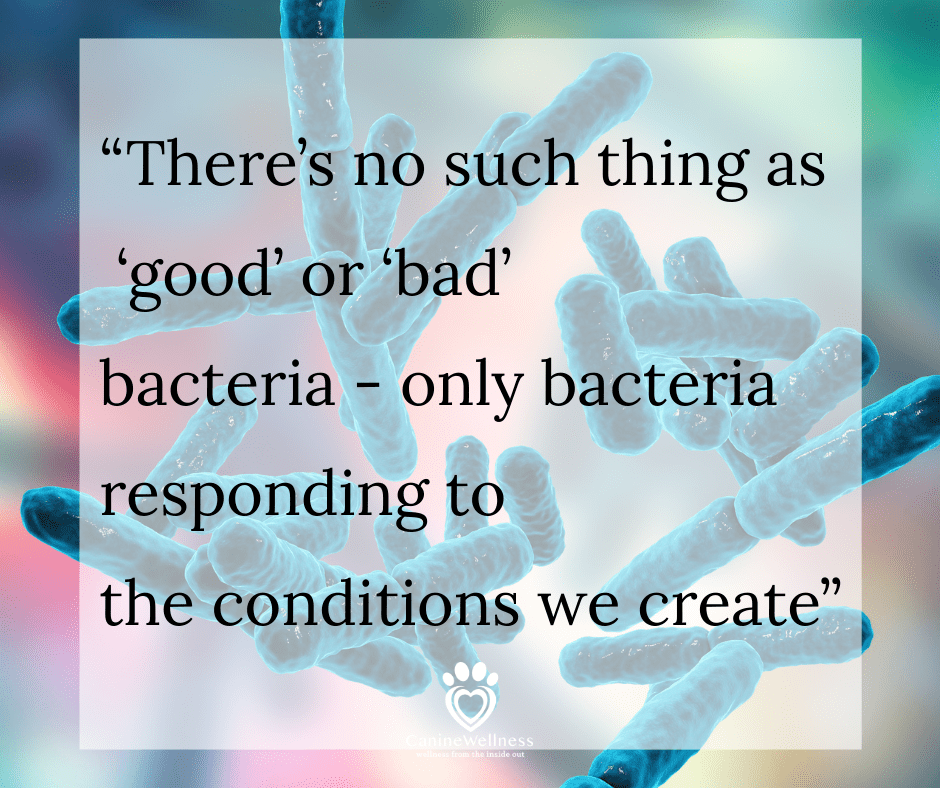
“There’s no such thing as ‘good’ or ‘bad’ bacteria—only bacteria responding to the conditions we create.

Temporary Fix vs. Lasting Change

Temporary Fix:

  • Prebiotics → feed bacteria, improve stools, but effects vanish once feeding stops.
  • Probiotics → pass through, tweak activity, disappear after supplementation ends.

Lasting Change:

  • Stop chasing the quick fix. Less is more. Remove irritants: processed foods, chemicals, vaccines/flea/worm products.
  • Feed a species-appropriate diet. The foods you give are what feed the microbiome; when fed correctly, the body naturally produces and maintains the bacteria it needs.
  • Allow your dog’s own microbiome to restore itself naturally.

The Bottom Line

Prebiotics and probiotics can provide short-term relief, but they’re:

  • Not essential
  • Foreign to the canine gut in supplemental form
  • Temporary, not permanent

True, lasting healing comes from feeding the right foods, removing irritants, and supporting the dog’s natural microbiome. Supplements are just a temporary, short-term solution and don’t remove the root cause.

✨ The body is a self-healing organism, always striving for balance and maintaining homeostasis when properly supported. The so-called “bad bacteria” don’t appear out of nowhere; they only flourish when the gut environment is out of balance. Feed your dog correctly and reduce irritants, and the microbiome naturally shifts back into harmony — no endless supplements required.

Need Help Supporting Your Dog’s Gut Health?

If you’re struggling with your dog’s digestion, itchy skin, acid reflux or general gut health, I can help. Through personalised guidance on diet, lifestyle, and natural gut support, I’ll show you how to remove irritants, feed the right foods, and support your dog’s microbiome naturally—without relying on temporary supplements or building a “supplement graveyard” of products that don’t work.

📩 Get in touch today to help your dog thrive from the inside out: https://canine-wellness-specialist.uk/contact/

Your Dog & Worms: The Hidden Truth

Reading time approx 4 minutes

We’ve been conditioned to see worms as dangerous parasites that “invade” our dogs from the outside. The story goes something like this: puppies pick up worms from their mother’s uterus or milk, and adult dogs get them from contaminated soil.

We’re told that because worms are everywhere, the only answer is constant prevention, harsh chemicals, testing, and a mindset of fear. Vets even push “health plans” that convince us our dogs need endless chemical treatments, when in reality, these only burden the body further.

But here’s the truth: this whole way of thinking is backwards.

Worms are not random invaders lying in wait to attack your dog. They are nature’s recyclers – opportunists that arrive when the body is struggling to cope with overload. Their role is to break down excess waste and congestion inside the terrain. In other words, worms are a symptom of imbalance, not the root cause.

In fact, a long-term, one-of-a-kind study at the University of Kentucky Gluck Equine Research Centre—with a herd that hasn’t received any deworming treatment for over 40 years—confirmed that despite the horses carrying significant parasite loads, they remained healthy throughout the year. The researchers noted:

👉 Mare pregnancy, foaling and lactation did not affect parasite fecal egg counts.

👉 No differences in parasite egg shedding between seasons.

👉 Horses had antibodies to the bloodworm (Strongylus vulgaris) throughout the year, and the parasite was steadily detected in fecal samples.

👉 Mares passed these antibodies onto their foals through the colostrum.


👉 Full article summary in the University of Kentucky’s Equine Science Review (PDF)

Just like in the natural world, worms in our dogs exist to restore balance. Out in the wild, they break down waste, keep soil healthy, and help ecosystems recover when something becomes overloaded. Inside the body, it’s the same. Worms appear not to harm, but to help – until their work is no longer needed.

We are all connected to these same laws of nature. The same cycles that govern the earth – balance, detoxification, renewal – also govern our dogs’ bodies and ours. Yes, humans can have worms too! Worms aren’t intruders; they are part of this larger system. When the internal environment is clean and balanced, worms have no job to do and fade away naturally.

It’s also completely normal for dogs to carry a low worm burden without any issues. A healthy body manages it with ease. Problems only arise when the terrain is compromised or ‘dirty’, allowing worms to multiply beyond what the body can handle.

What About the Scary Numbers?

Lab websites often share dramatic facts:

  • A single female hookworm can produce 20,000 eggs per day.
  • A roundworm, up to 85,000 eggs per day.
  • Whipworm eggs can survive in soil for years.
  • Tapeworms are linked with fleas, which can each lay around 50 eggs per day.

Yes, those numbers may be true. But here’s the key: numbers don’t equal disease.

Your dog could be exposed to worm eggs every single day and never develop an issue – if their terrain is strong and balanced.

The symptoms you often see listed – diarrhoea, a pot-bellied tummy, dull coat, coughing, lethargy – are not signs of worms randomly attacking a healthy dog. They’re signs of an overloaded system, where worms have multiplied to assist in the clean-up.

Even the “prepatent period” (how long from ingestion until eggs are detectable in faeces)—e.g. 15–20 days for hookworm, 14–80 days for roundworm, 74–90 days for whipworm isn’t something to panic about. What matters is not when eggs appear, but whether the terrain is strong enough to prevent worms from thriving in the first place.

As for tapeworms – yes, they’re linked to fleas. But rather than panicking and dousing your dog and home with harsh chemicals, remember this: dogs with strong, clean systems are naturally less attractive to parasites. You can manage fleas gently, without adding to the toxic load.

The Real Solution

We’ve been taught to fear worms and to reach for chemical wormers as the only solution. But these drugs don’t address why the worms are there. In fact, repeated chemical use only weakens the body further – creating the very conditions worms love.

The real solution is simple but powerful: support your dog’s terrain.

  • Feed real, species-appropriate food.
  • Reduce toxins.
  • Allow the body to detox.
  • Add gentle natural supports when needed – like Grapefruit Seed Extract (GSE), pumpkin seeds (contain cucurbitacin, a natural worm expeller), and cucumber (a mild anti-parasitic).

There are many natural herbal supplements marketed for worms, too, but I rarely recommend them. Most of the dogs I work with are already in overdrive. Adding more “stuff” often complicates things further, instead of simplifying.

When you focus on creating a clean internal environment, worms have no job to do. They simply step aside.

I used to be scared of my dogs getting worms. I would worm-count every three months because I thought it was the responsible thing to do. But now, worms rarely even enter my head. Once you understand their role and support your dog’s terrain, the fear naturally fades.

Remember: worms are not the enemy. They are nature’s clean-up crew, stepping in when the terrain is congested. When you honour the natural laws that connect all living things, you begin to see worms for what they really are: part of a much bigger picture.

True health starts from the inside out.

🌿 Need Help?
If you’re unsure where to start, or your dog is dealing with ongoing worm issues, I’m here to help. I offer guidance on how to support your dog’s inner terrain naturally – without fear, stress, or chemical overload.

📩 Reach out for support or a personalised plan – your dog’s healing journey can begin today. https://canine-wellness-specialist.uk/services-2/

Thank you for reading,

Teresa x

Reference

Martin Nielsen et al., “New study from one-of-a-kind herd with no deworming for 40 years,” University of Kentucky Gluck Equine Research Centre. equine.ca.uky.edu

The Hidden Detox Systems Behind Your Dog’s Itching, Inflammation & Gunk: Lymph and Kidneys

Reading time approx 3 minutes

Let’s talk lymph because if your dog’s itchy, inflamed, or full of yeasty gunk, this system needs your attention.

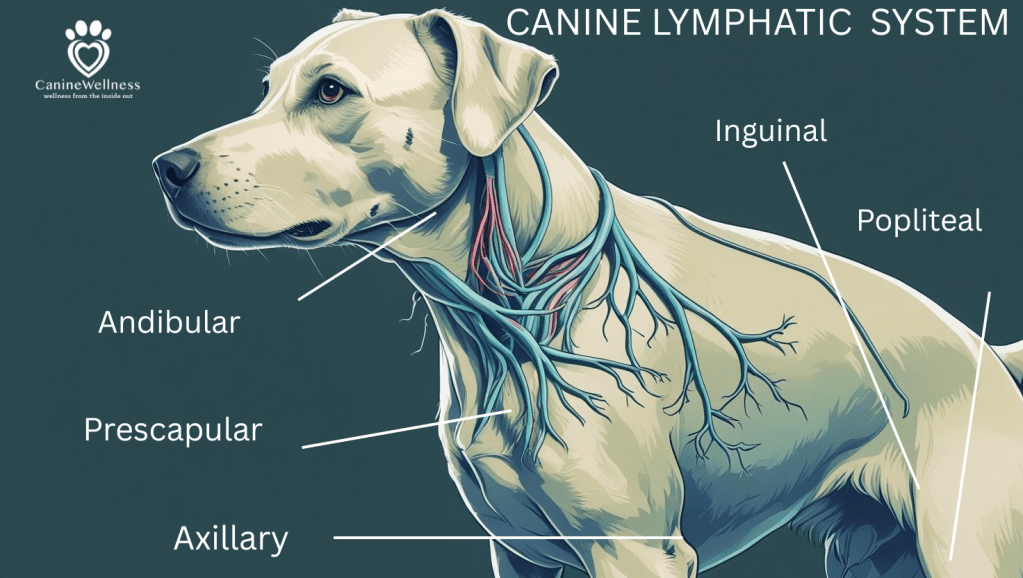
Your dog’s lymphatic system is like a sewer network. Its job? To collect waste from every single cell in the body and carry it out. It deals with acids, dead cells, toxins, and general metabolic rubbish that your dog’s body doesn’t want hanging around.

The problem? The lymph system has no pump.
Unlike the blood, which has the heart to push it around, the lymph relies on movement, muscle activity, deep breathing, and hydration to move. So if a dog is sluggish, inflamed, or on a dry processed diet… guess what? The lymph gets stuck.

And when lymph gets stuck, it becomes toxic. Acidic. Hot leading to dis-ease.
That’s when you see things like:
   •   Raw, red skin
   •   Hotspots
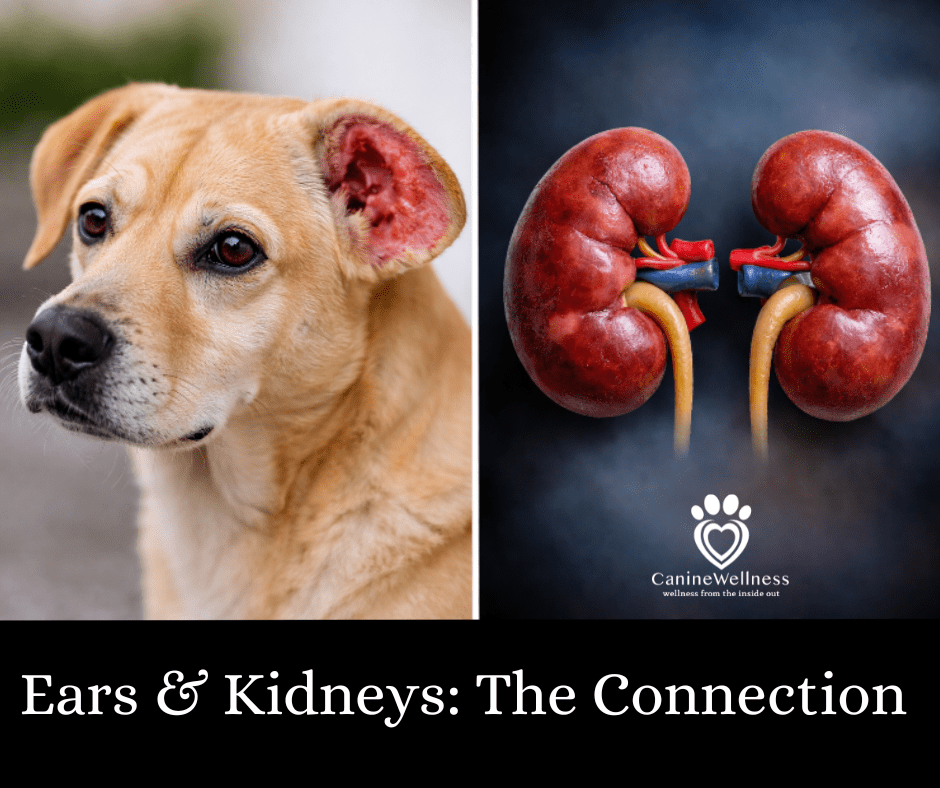
   •   Gunky, yeasty ears
   •   Paw chewing
   •   Swollen glands
   •   And even organ damage over time

And where does all that lymph go?
To the kidneys. That’s where the real detox happens. The kidneys are the body’s filtration system, the final stop for waste removal. Their job is to take all the toxins, acids, and cellular debris collected by the lymph and eliminate them through urine.

But here’s the issue: when the kidneys become sluggish, congested, or underactive, which is all too common in dogs burdened by poor diets, chronic dehydration, toxic exposure, or a history of over-medication, the lymphatic system can’t drain efficiently.
It backs up. And when that happens, the whole body becomes a waste dump.
So if your dog is inflamed, itchy, or loaded with symptoms, it’s not about suppressing the signs; it’s about helping the body drain and clear the junk out.

From a natural hygiene perspective, many of these symptoms, like gunky eyes, waxy ears, or excessive discharge, are the body’s intelligent way of protecting itself. When acidic waste builds up in the tissues and the lymph can’t clear it fast enough, the body produces mucus to buffer and neutralise those acids. Mucus acts as a natural shield; it binds to acids and toxins, helping prevent cellular damage.

This process may not look pretty, but it’s nothing short of miraculous. The body, in its wisdom, creates these responses not to harm but to heal, to buy time, to protect, to cleanse. Rather than viewing mucus or discharge as a “problem,” we can begin to see it as part of the body’s remarkable effort to restore balance and eliminate what doesn’t belong. Support that process, and the body can do what it was always designed to do: heal.

One of the simplest ways to do that?
Hydrating fruits.

Watery, cleansing foods help thin the lymph and support kidney function, giving waste a clear path out of the body.

Why is hydration so essential? Because your dog’s body is about 70% water.
And water isn’t just a thirst-quencher, it’s the medium for every biological function: digestion, circulation, temperature regulation, detoxification, and yes, lymph flow and kidney filtration.

To maintain homeostasis, that vital balance where everything runs smoothly, your dog needs constant hydration. And not just from the water bowl.
He needs structured, living water from raw, fresh foods, just like nature intended.

When the body becomes even mildly dehydrated, lymph gets sticky, detox slows, kidneys struggle, and inflammation builds. That’s when you start seeing the signs:
itchy skin, gunky ears, hotspots, fatigue, and more.

Here are some of my favourite fruits to help get the lymph moving:
   •    Watermelon – deeply hydrating and super gentle
   •    Cucumber and Courgette – cooling, moistening, and easy to digest
   •    Pears – gentle on the gut and great for moisture
   •    Blueberries – support both the lymph and the kidneys

These fruits are loaded with structured water, enzymes, and natural astringents that help dissolve waste and pull it out through the kidneys.

And no, the sugar in fruit isn’t a problem when you’re using real, whole, raw fruits as part of a healing protocol. The real problem is the fats, meds, vaccines, and dehydrating processed food clogging up the works.

Fasting helps. When done safely, short breaks from food (even just a skipped meal or a mono-fast with hydrating fruits) give the digestive system a rest. This allows the body to shift energy toward detox, helping the lymph flow more freely and the kidneys do their job more effectively.

I go deeper into this in my blog on fasting here: https://canine-wellness-specialist.uk/2024/04/09/fasting-dogs/ if you’d like to learn when and how to do it in a way that supports healing.

🌿 Movement helps too! gentle walks, fresh air, sunshine, and calm time outdoors all support lymph flow.

Manual Lymphatic Drainage for Dogs: Gentle Techniques You Can Try

The lymph system lives just under the skin, and that’s why light, intentional touch can go a long way. You don’t need deep pressure or anything forceful. In fact, lymph responds best to a soft, sweeping rhythm that mimics the natural flow of fluid in the body.

Here are some simple techniques to support lymph movement in your dog:

1. Start with Calm Connection

Make sure your dog is relaxed before you begin. Choose a quiet, safe space and start with a few gentle strokes along their back or chest to help them settle in. Calm breathing and slow movements will help both of you.

2. Neck & Chest Circles

This area is rich in lymph nodes. Use flat fingers and make light, circular motions just above the collarbone and along the side of the neck, think of it as waking up the drainage points. Do this for about 30 seconds on each side.

3. Behind the Ears & Jawline

Using gentle pressure, stroke from behind the ears down the neck toward the chest. This helps move lymph from the head and face, especially helpful for dogs with gunky ears or eye discharge.

4. Under the Front Legs (Armpits)

There are large lymph nodes under the forelimbs. Gently lift the leg and use soft fingers to sweep the area inward toward the chest. Always keep the motion flowing toward the heart.

5. Back Legs & Groin

Use the same soft sweeping motion along the inner thigh, moving upwards toward the belly. This can be especially supportive for dogs with inflamed paws or back-end swelling (anal glands). You can read more about anal glands and their function here: https://canine-wellness-specialist.uk/2025/04/23/anal-glands-unpacked-why-dogs-struggle-how-to-fix-it-the-natural-way/

6. Finish with Long Sweeps

Wrap up the session by using long, slow strokes from the shoulders down to the paws and from the hips to the feet. This promotes overall circulation and leaves your dog feeling relaxed and grounded.

You can also use a soft dry brush designed for pets. Many dogs find this incredibly soothing, and it’s a gentle, relaxing way to stimulate lymph flow and improve circulation.

⏱️ How Often?

You can apply these techniques a few times a week, or even daily if your dog is experiencing inflammation or swollen glands, ‘allergies’, or detox symptoms. Each session only needs to last 5–10 minutes.

If you’re unsure or want to go deeper, you can consult a certified canine massage therapist or practitioners with experience in Manual Lymphatic Drainage (MLD) who are trained in working with animals. These professionals can offer guidance tailored to your dog’s individual needs and ensure you’re using techniques safely and effectively.

A Few Cautions:

  • Don’t massage over swollen or painful areas unless guided by a professional.
  • If your dog resists, stop! this should always feel soothing, not stressful.
  • Avoid deep pressure; lymph vessels are fragile and respond best to feather-light touch.

So, if your dog’s lymph is stagnant and their kidneys are blocked, the waste has nowhere to go and the body gets overwhelmed.

✨ Supporting detox is about getting things moving again not forcing, not suppressing. Let the body clear itself out.

It starts with real food, a low-fat, species-appropriate raw diet of meat, bone, and offal supported by hydrating, water-rich fruits to get things flowing. A break from the junk.
And it ends with healing from the inside out.

Thank you for reading,

Teresa x

💬 Let’s Work Together

If your dog is showing signs of toxic overload, itchy skin, gunky ears, hotspots, swollen glands, don’t wait for it to get worse.
I offer gentle, natural support to help dogs detox safely using real food and holistic guidance tailored to your dog’s unique needs.

Get in touch here https://canine-wellness-specialist.uk/contact/

 NEW Flea & Tick Injection Alert: Bravecto Quantum – A Neuro Nightmare for Dogs!

Reading time approx 3 mins

There’s a new chemical cocktail being pushed on pet parents, and it’s got me shouting from the rooftops: please don’t fall for it.

📢 It’s called Bravecto Quantum, a 12-month injectable flea and tick treatment for dogs.

Yes, you read that right. One jab. 365 days. A full year of insecticide pulsing through your dog’s body. And guess what it targets? The nervous system, not just of fleas and ticks, but often of the dogs, too.

💥 What is Bravecto Quantum?

Bravecto Quantum is the injectable version of Bravecto, part of the same dangerous class of flea and tick products (isoxazolines) that’s been linked to seizures, tremors, unsteadiness, vomiting, and even death in thousands of dogs.

And now they’ve put it into a 12-month injection, which means:

  • You can’t stop it once it’s in
  • You can’t detox it out quickly
  • And if something goes wrong, you can’t reverse it

It’s a neurotoxin designed to paralyse fleas and ticks. But for many dogs, especially those with existing sensitivities, inflammation, or toxic load, it can have serious neurological effects.

⚠️ Safe and Effective? Not So Fast…

The phrase “safe and effective” is thrown around far too lightly in the pet industry.

Safe for whom? A lab-tested beagle in a short-term trial? Or your individual dog, who may already be dealing with food sensitivities, itchy skin, vaccine damage, or a body that is already compromised?

🇬🇧 Is It Available in the U.K.?

Yes, and here’s the part most people don’t know:

Bravecto Quantum has been available in the U.K. since early 2024, following approval by the European Medicines Agency (EMA). But it flew under the radar — most pet parents have only just started hearing about it because it was only recently approved in the U.S. (July 2025).

It was authorised by the Veterinary Medicines Directorate on 24 June 2024, under licence VM 01708/5091, and is available by prescription only through vets.

You can read the official VMD product sheet here: 👇🏻
https://www.vmd.defra.gov.uk/productInformationDatabase/files/SPC_Documents/SPC_2808659.PDF

Now, vets across the U.K. are beginning to offer it as part of ‘preventative care packages’ alongside annual jabs and checkups. That’s why this is the time to speak out, before it becomes the new normal.

🧠 It Targets Nerves – Including Your Dog’s

This drug interferes with how nerve signals work, in fleas, ticks… and yes, sometimes in dogs too.

I’ve personally supported dog parents after reactions to Bravecto, Nexgard, Simparica, and similar drugs. The side effects can include:

  • Chronic itching
  • Disorientation or confusion
  • Head tremors
  • Seizures
  • Sudden behaviour changes
  • Digestive upset
  • Lethargy and more

Once that shot is in, you’re stuck with it for a full year. There is no off-switch.

🌱 Natural Alternatives Do Exist

You don’t have to choose between fleas and chemical cocktails.

Supporting your dog’s internal terrain is the key. A clean, species-appropriate, low-fat diet reduces the appeal of your dog to parasites. Add gentle natural repellents, real food, detox support, and ditch the toxins — and you’ll be amazed at what the body can do.

❤️ If Your Dog’s Already Struggling…

If your dog is already itchy, yeasty, inflamed, anxious, or has had vaccines, antibiotics, or parasite treatments, this injection is the LAST thing they need.

I offer bespoke detox and healing plans to gently support recovery and help your dog thrive without the junk. No suppressing symptoms here, I look at the root cause and remove what doesn’t belong.

🐾 Book a Consultation

💬 Ready to help your dog heal naturally?

Book a 1:1 with me here:

Because real health doesn’t come in a syringe, and your dog deserves better.

It’s time to speak out and spread the word before it becomes the new normal.

Thank you for reading,

Teresa

The Disease-for-Profit System: Why Your Dog’s Health Isn’t Their Priority

Reading time approx 4 minutes

We live in a world that’s completely upside down, where dry, ultra-processed brown pellets are sold as the healthiest option for dogs, and fresh, species-appropriate food is labelled as dangerous. Where toxic flea treatments and vaccines are pushed as essential, and natural health is brushed off as “woo woo.”

But when you stop and look around, it all starts to make sense, not from a wellness perspective, but from a business one.

Because this system isn’t set up to heal.

It’s set up to profit from disease.

❌ What Is the Disease-for-Profit System?

It’s the cycle where industries, like pharmaceuticals, processed pet food, and even many corporate vet chains, make more money when your dog stays unwell. Not critically ill, but just sick enough to need ongoing “management.”

They don’t need to ‘cure’ anything; in fact, ‘curing ‘ would be bad for business.

What they need is lifelong customers.

The truth is:

Disease is made. It doesn’t just happen overnight.

It’s the result of long-term exposure to the wrong food, chemicals, drugs, and stress.

But instead of helping us uncover why dogs are inflamed, itchy, reactive, or in pain, the system just steps in with suppressive meds, synthetic diets, and chemical treatments to keep the symptoms quiet… for now.

🧪 Let’s Start with Pet Food

Kibble is the cornerstone of the problem. It’s marketed as “complete and balanced,” but what that really means is: heat-damaged, dry, synthetically fortified pellets made from leftovers and fillers.

It’s cheap to make. Easy to store. Easy to sell.

But feeding it long-term leads to:

  • Chronic inflammation
  • Skin issues, hot spots, and gunky ears
  • Yeast overgrowth
  • Pancreas, liver, and kidney stress
  • ‘Allergies’ and sensitivities
  • Digestive imbalance
  • Low energy and behavioural changes

The body can only cope for so long before things start breaking down. But instead of saying, “Let’s remove the cause,” you’re told, “Let’s put your dog on a hypoallergenic prescription kibble.”

Spoiler alert: It’s still kibble, just more expensive, more processed with horrendous ingredients.

💊 And What Happens at the Vet?

If your dog is itchy, you’ll likely be offered Apoquel or Cytopoint, both drugs that suppress the body’s natural inflammatory response. Sure, the itching can stop, but that’s only because the body is no longer allowed to react. The problem hasn’t been fixed; it’s just been buried deeper, which drives the dis-ease deeper into the body, setting the stage for chronic illness.

For digestive issues, it’s antacids or antibiotics.

For ear infections, it’s steroid drops, again and again.

Every symptom is treated like a separate condition, but no one ever asks:

Why is your dog’s system under pressure in the first place?

Most conventional vets mean well; they’re kind people working within a broken system. But vet education is heavily influenced by pharmaceutical and pet food companies. The same companies that sell the products are writing the textbooks and sponsoring the training.

It’s not health care. It’s symptom management, wrapped in sciencey-sounding jargon and marketed as gold-standard care.

💸 The Cycle Looks Like This:

  1. Feed ultra-processed food.
  2. Body gets inflamed, overloaded, and toxic.
  3. Suppress symptoms with drugs and medicated products.
  4. It damages the body further over time.
  5. Return to the vet, repeat tests, get more prescriptions.
  6. Buy more expensive “solutions” that never truly heal.
  7. Keep coming back, because your dog’s still unwell.

Round and round it goes.

It’s profitable, not preventative.

🧠 But We’ve Been Brainwashed to Accept It

We’ve been told it’s normal for dogs to have:

  • Chronic ear infections
  • Constant itching
  • Yeast in their paws
  • Anal gland issues
  • Daily medication
  • Repeated antibiotic courses
  • Behavioural issues due to “breed traits”

But it’s not normal, it’s common, and there’s a big difference.

We’ve been so conditioned to believe this is just part of dog ownership that we stop asking questions.

We get stuck in survival mode, doing what we’re told, hoping for relief.

🐾 What’s the Alternative?

Simple:

Support the body, don’t suppress it.

Feed real food, not synthetic pellets.

Detox gently, and remove the causes of inflammation.

That’s how you reverse the cycle. That’s how you get your dog truly well.

This is the work I do every day, helping people break out of the system and find real answers. It takes courage to go against the grain, but once you see it… you can’t unsee it.

Your dog was never meant to live on brown balls and booster jabs.

They were designed to thrive on real food and clean living.

Sickness isn’t random. It’s created, and it can be uncreated.

🌿 Final Thoughts

If your gut has been telling you that something feels off, trust that.

You’re not paranoid, you’re awake.

The disease-for-profit system only thrives when we stay quiet, confused, and compliant. But you don’t have to play by those rules anymore.

There is another way.

And I’m here to show you how to take it by ditching the drugs, jabs, and junk and get your dog back to health the natural way.

Thank you for reading.

Teresa x

Malabsorption in Dogs: When Food Alone Isn’t Enough

Reading time approx 3 minutes:

We put so much care into choosing the right food for our dogs, whether it’s raw, gently cooked, or whole-food based. But what if even the most nutritious food isn’t being used by the body the way it should be?

This is where malabsorption comes in, a condition that’s more common than most dog guardians realise, especially in dogs with long histories of processed or inappropriate feeding.

💡 What is Malabsorption?

Malabsorption simply means the body is unable to absorb nutrients effectively from the food being eaten. It’s not always about what you feed, it’s about how well your dog’s body can extract, absorb, and use those nutrients.

🧠 A Deeper Look: Years of Misfeeding Take Their Toll

Many dogs today have been raised on highly processed, species-inappropriate diets, with kibble being the biggest culprit. Over time, these diets can:

  • Damage the gut lining
  • Disrupt natural enzyme production
  • Inflame and irritate the intestines
  • Encourage waste buildup in the gut

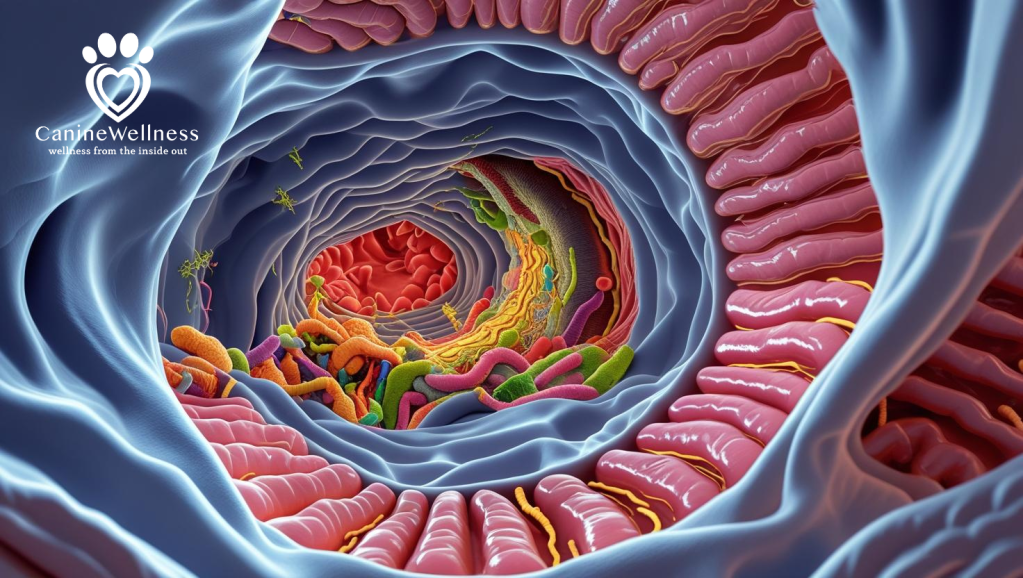
This waste doesn’t just move on. Instead, it embeds itself in the microscopic grooves of the intestinal lining, hardens, and turns into a sticky, tar-like residue.

🔒 Why This Is a Problem

This hardened build-up acts like a wall between your dog’s food and their body. Imagine the gut as a sponge; it’s meant to absorb nutrients. But when it’s coated in sticky debris, it can’t absorb properly.

The results?

  • Nutrient deficiencies
  • Low energy
  • Poor coat quality
  • Chronic skin issues
  • Inflammation
  • Toxin buildup
  • Loose stools or ongoing digestive troubles.

No matter how healthy the food is, if the gut lining is compromised, those nutrients won’t reach the bloodstream, and the body can’t use what it can’t absorb.

⚠️ Signs Your Dog May Be Experiencing Malabsorption

  • Eating a good diet but still underweight or low energy
  • Chronic diarrhoea, loose stools, or inconsistent poops
  • Dull coat, dry skin, or excessive shedding
  • Frequent itching or signs of inflammation
  • Bad breath despite dental care
  • Symptoms that don’t improve even with “clean” food

🛠️ What You Can Do About It

1. Support a Gentle Detox

Clearing out that waste build-up is key. Detox doesn’t mean harsh cleanses; it means supporting the body’s natural ability to clear debris on its own, hydration, rest and in some cases, using appropriate supplementation.

2. Introduce Fasting or Simplified Diets

Giving the digestive system a break allows the body to focus on repair, not digestion. Fasting (when used appropriately) is incredibly effective in helping the gut shed accumulated waste.

3. Avoid Processed or Chemical-Laden Foods

Even “high-quality” kibble, wet foods and commercially prepared cooked foods are still processed. The goal is to return to species-appropriate, whole-food nutrition that the body can recognise, break down, and absorb.

4. Repair the Gut Lining

Once the root cause of malabsorption is addressed and removed, the body has an incredible ability to heal itself, especially when returned to a natural, species-appropriate diet. By feeding foods that align with your dog’s biology, you provide the building blocks for the gut lining to restore its strength and function over time. In some cases, a high-quality digestive enzyme supplement specifically designed for dogs and cats may be beneficial in kick-starting the healing process.

5. Work With a Practitioner

Every dog is unique. If you suspect malabsorption, a qualified canine health professional like me can evaluate your dog’s symptoms and develop a plan tailored to their needs.

🐶 Food Is Only As Good As What Gets Absorbed

Malabsorption can quietly undermine even the best feeding practices. But with the right approach – detoxing, fasting, gut support, and appropriate nutrition, you can help your dog get the most out of their food again and truly thrive.

Because in the end, it’s not just about feeding—it’s about healing.

Thank you for reading.

Teresa x

Why Dairy Doesn’t Belong in Your Dog’s Bowl 

Reading time approx 2 mins

Let’s talk about dairy and dogs. Despite the popularity of cheese treats, probiotic yoghurts, and kefir, dairy is not species-appropriate for our canine companions.

Dogs are mammals, so yes, they start life drinking their mother’s milk. But here’s the key: after weaning, dogs naturally lose the enzyme (lactase) that breaks down lactose, the sugar found in milk. This is completely normal because in nature, dogs wouldn’t continue drinking milk once weaned. And they certainly wouldn’t drink the milk of another species like cows or goats.

Feeding your dog cheese, yoghurt, or kefir might seem harmless (or even beneficial), but here’s the truth:

  • Dogs are not designed to digest dairy. It often leads to bloating, gas, loose stools, or silent inflammation that shows up later as itchy skin, ear infections, or yeasty paws.
  • Kefir and yoghurt do not feed your dog’s gut health. The idea that these foods provide “good bacteria” is a human concept rooted in probiotic marketing. Your dog’s gut doesn’t need these foreign bacteria, especially from fermented cow’s milk.
  • Dairy is mucous-forming. In both dogs and humans, dairy promotes excess mucous production. This can congest the system and create the perfect environment for inflammation, ‘allergies’, and chronic conditions to thrive.
  • Dairy feeds imbalance, not health. Many of the chronic symptoms people see in their dogs—itchy skin, gunky ears, paw licking, anal gland issues are made worse by foods that don’t belong in a species-appropriate diet.

It’s so important to remove these foods entirely; even a small treat with dairy will not benefit your dog. It can quietly hinder healing or contribute to long-term disease.

“Just a little” still matters. If your dog is dealing with inflammation or detoxing, every bite counts. Even the occasional bit of cheese can throw off progress. Healing requires clarity and consistency.

Dogs are not mini humans. Just because kefir or yoghurt is seen as “healthy” for us doesn’t mean it’s suitable for dogs. Their digestive systems are completely different. Feeding human food trends to dogs can do more harm than good.

And remember this: No other animal drinks milk after weaning, especially not from another species. That fact alone tells us how unnatural it is. We’ve normalised dairy for convenience and tradition, not because it supports true health.

That’s why my consultations offer a one-to-one approach, where I look deeply at your dog’s current diet and help you remove the foods—like dairy—that simply don’t belong.

Feeling like your dog’s diet might need a little refresh?

Whether you’re just starting out or you’re an existing client noticing a few niggles, itchy paws, gunky ears, or just that feeling something’s not quite right it could all be linked to diet. 

My one-to-one consultations are designed to uncover what’s going on and help your dog get back to thriving. If you’re ready for a reset or need to revisit your dog’s current plan, I’m here to support you.

With love and truth,

Teresa  💚🐶