
Reading time: Approx 4 minutes
If you’re a dog owner, you’ve probably heard of anal gland problems at some point whether from your vet, a groomer, or other pet parents. But what exactly are anal glands, and why do some dogs seem to struggle with them more than others? In this post, I’m going to break down the function of these glands, why they sometimes become a problem, and how diet plays a huge role in your dog’s anal gland health.
What Are Anal Glands and What Do They Do?
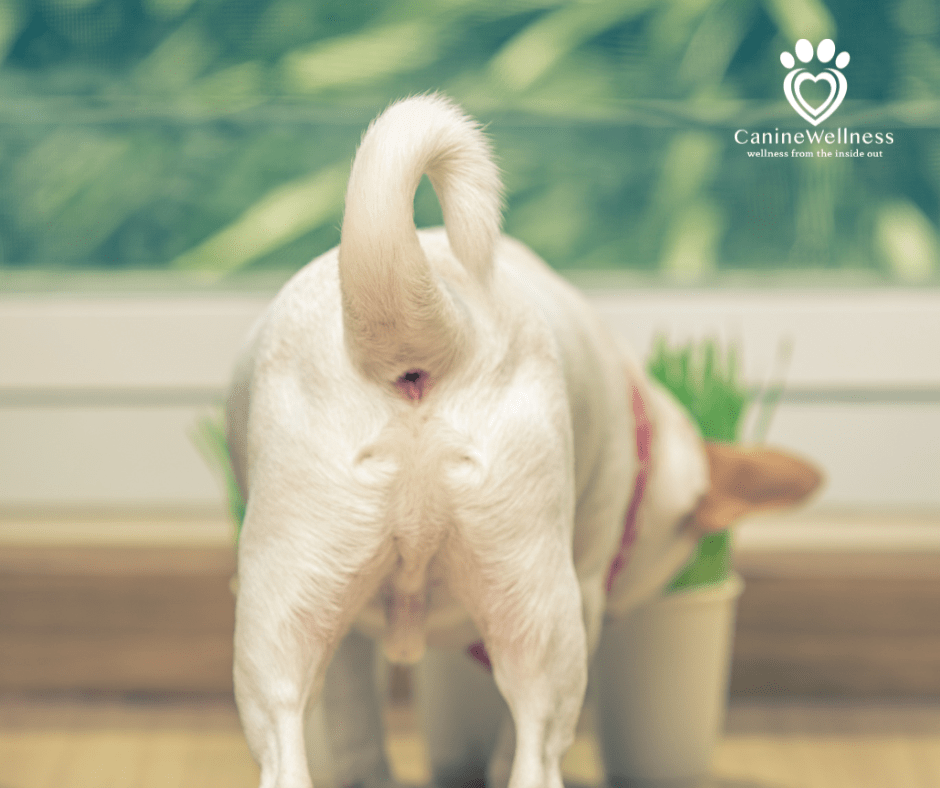
Every dog has two small anal glands located on either side of their anus. These glands are responsible for producing a strong-smelling secretion that’s typically used for marking territory. While this may sound unpleasant to us, it’s totally normal and a part of your dog’s natural hygiene system.
When your dog has a healthy bowel movement, the anal glands are naturally expressed. This means the glands empty their contents, releasing a distinctive scent as the poop passes through. It’s a form of communication for dogs, as they mark their scent wherever they go.
Why Do Some Dogs Have Anal Gland Problems?
While anal glands are meant to be naturally expressed during bowel movements, some dogs have trouble with this process. When anal glands aren’t emptied properly, they can become impacted, inflamed, or even ‘infected’. Over time, this leads to discomfort and health issues.
The primary cause? Often it’s diet. If a dog’s stool is too soft or inconsistent, it doesn’t put enough pressure on the anal glands to express them naturally. Without that pressure, the glands fill up and may become impacted.
What’s Really Going On Beneath the Surface
Anal gland issues are more than just a minor inconvenience they’re often a sign that your dog’s body is struggling to eliminate waste efficiently. When the usual detox channels (like the liver, kidneys, bowels, and skin) are overloaded or under-functioning, the body finds alternative routes to store or release waste.
Glands including the anal glands can become holding places for this waste. If it isn’t expelled properly, it can build up over time and lead to inflammation, impactions, cysts or even tumours in some cases. You can read more about the seven stages of disease here https://canine-wellness-specialist.uk/2022/04/23/the-seven-stages-of-disease/
This is why it’s so important not to just treat the symptoms. Instead, we look at the whole dog: their diet, digestion, movement, and overall well-being. By doing this, we support the body’s natural ability to function and heal.
Dehydration
Anal glands can get clogged when a dog’s body is short on water. Cooking pulls moisture out of food, so a diet heavy in cooked meals, such as kibble and processed foods leaves the whole lymphatic “waste‑removal” network, anal glands included dried out and stagnant. The fluid there thickens, backs up, and causes blockages.
The fix starts with re‑hydrating the body. When we remove the root cause (dehydration), the glands can usually clear themselves. Fresh, water‑rich raw fruits are the best hydrators. Think watermelon for a big moisture boost, or soft fruits like bananas, which are easy to pass if the glands are already irritated.
A short fast often settles things, but feeding a light plant‑based meal can also help sweep out and moisten that lingering debris so it passes more easily.
Signs Your Dog Might Have Anal Gland Issues
- Scooting: Dragging their bottom along the floor
- Fishy or foul odour: A strong, unusual smell from the rear end
- Excessive licking: Especially around the tail or bottom
- Restlessness or difficulty sitting: Signs of discomfort or pain
Should Your Dog’s Glands Be Manually Expressed?
A lot of dogs have their anal glands expressed regularly by groomers or vets. But here’s the thing! manually expressing them too often can interfere with their natural function. Over time, the glands may become reliant on being manually emptied and stop working as they should.
If your dog isn’t showing signs of gland issues, it is usually unnecessary to have them expressed. If you do use a groomer, always ask if they express the glands, as this can be part of a routine service they provide, and you may not even know they are doing it. If they are, kindly ask them to stop unless medically necessary.
How to Help Anal Glands Function Naturally
You can support your dog’s gland health by making a few key changes, especially around diet and digestion:
Add Fibre to Their Diet: Fibre helps create firm stools, which put the necessary pressure on the anal glands during bowel movements.
Feed the Right Foods: A species-appropriate, raw diet supports healthy digestion and reduces the build-up of internal waste that can end up in glands.
Support the Whole System: Make sure your dog is well-hydrated, gets regular exercise, and has plenty of time to rest. These things all play a role in how well the body processes and eliminates waste.
Watch for Digestive Imbalance: If your dog frequently has soft poops or inconsistent digestion, this could be the root of the gland issue. Addressing gut health will often solve the problem at its core.
In Summary
Anal gland problems aren’t “just something dogs deal with.” They’re signals, signs that something deeper may be going on in the body. By taking a whole-dog approach and focusing on the root causes (especially diet and digestion), we can support your dog’s body to work the way it was designed to. Naturally.
If your dog is struggling with recurring gland issues, let’s take a step back, look at the bigger picture, and help their body find balance again, one bowl at a time.
Need personalised, one‑to‑one support for your dog’s anal gland or digestive issues? Contact me today, and together we’ll create a tailored plan that gets to the root of the problem and helps your pup feel comfortable again.
Thank you for reading!
Teresa
 Canine Wellness Specialist