
Reading time approx 5 mins
Flea and tick season is upon us, and keeping your furry friend safe is a top priority. While chemical treatments are common, they often come with unwanted side effects and are toxic. Luckily, there are natural alternatives that can help protect your pup without exposing them to harsh chemicals. Let’s explore some of the best natural flea and tick prevention methods!
Natural Flea & Tick Prevention Tips
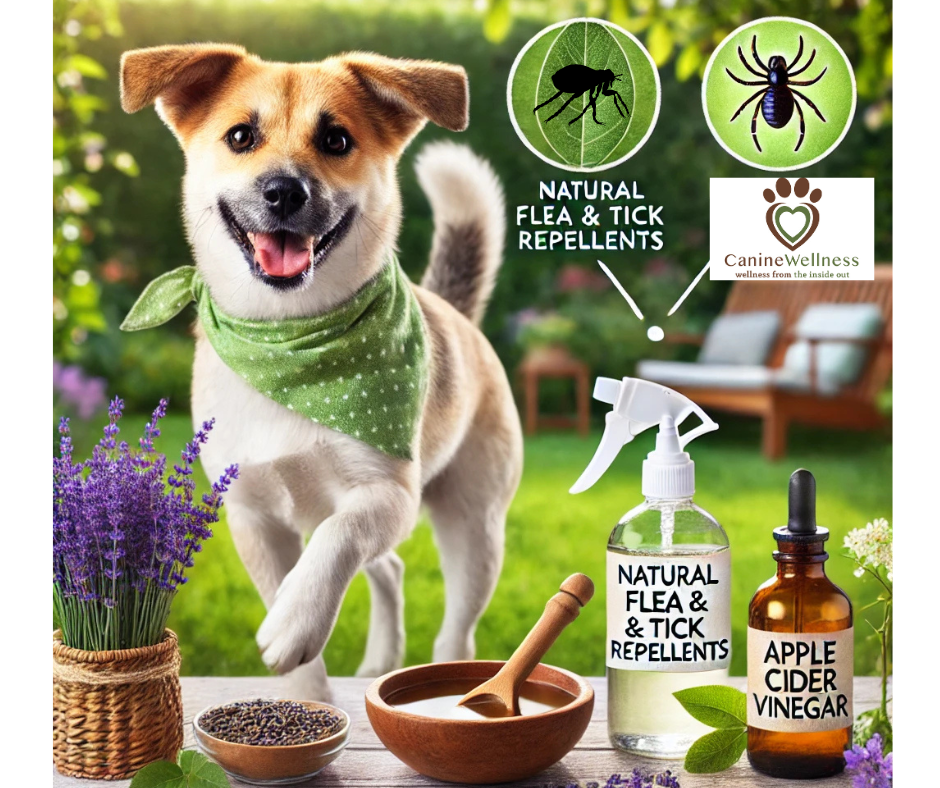
✅ Apple Cider Vinegar (ACV) – Mix a 50/50 mixture of ACV and water, then lightly spray it onto your dog’s coat before heading outdoors. This natural solution helps deter pests, making your pup less appealing to them. Be sure to avoid any sore or irritated areas, as the vinegar may cause discomfort. If you or your dog are not keen on the smell, try the Don’t Bug Me Spray or Roller listed below.
✅ KG Pet Spray – is Natural and Chemical Free. It is Effective in Eliminating Mange (all types), Fleas, Ticks, Mites and Itchy Skin Problems. This has always worked wonders for my itchy dog, and I never go without it in my home. It can be sprayed directly onto their coat, as well as around the home, including areas where they sleep.
✅ Neem – I’ve used neem oil a few times on my dogs for harvest mites with great success! Neem oil is a natural, safe way to treat pests like fleas, ticks, and mites. It works by disrupting the pests’ ability to feed and reproduce, and it’s gentle on your pet’s skin.
✅ Coconut Oil – Applying coconut oil to your dog’s coat a few times a week acts as a natural repellent and also benefits their skin and coat health. Opt for Organic Extra Virgin Raw Coconut oil.
✅ Essential Oils – Essential oils, like peppermint, rose geranium and lemongrass, can be powerful natural repellents. Always ensure they are 100% pure (preferably organic) and properly diluted before applying to your dog.
✅ Herbal Flea Collars – You can easily create your own natural flea-repelling collar by adding a few drops of essential oils to a fabric collar or bandana. For a more ready-made option, Baltic amber and EM flea collars offer fantastic chemical-free alternatives. I personally use both on my dogs and affectionately refer to them as our “hippy necklaces”!
✅ Regular Grooming – Frequent baths using natural shampoos and daily brushing can help keep fleas and ticks at bay.
Keeping Your Pup Safe, Naturally
By incorporating these natural methods into your routine, you can help protect your dog from fleas and ticks without relying on chemicals. A little prevention goes a long way in ensuring your furry companion stays happy and healthy! 🐾✨
Recommended Products
Here are some natural flea and tick prevention products that I personally use and recommend.
🔹I do not receive an affiliate commission for these recommendations—these are just products that have worked well for me and my dogs, and I recommend them to all I work with!
Amber Collars: Baltic Amber Collar – Mr Slobberchops – Natural Pet Health
Mr Slobberchops Flea and Tick Collar: https://mrslobberchops.org/products/flea-tick-collar?_pos=4&_sid=ca11516b2&_ss=r
Bug Off Flea and Tick Collar: https://www.facebook.com/Bugoffnaturaldogcollars
KG Pet Spray: KG Pet Spray for Mange, Fleas & Ticks
Don’t Bug Me Spray: Don’t Bug me now Spray – Mr Slobberchops – Natural Pet Health
Don’t Bug Me Roller: Don’t Bug Me now Roller – Mr Slobberchops – Natural Pet Health
Ekoneem: Ekoneem Neem Oil | Official Site| Purchase our products online or use our printable order form
If we get a tick we remove it with one of these: How to Remove a Tick from a Human | Dogs | Cats
Natural Remedies for Flea Infestations in the Home
If fleas have made their way into your home, try these natural solutions to eliminate them without harsh chemicals:
✅ Diatomaceous Earth (DE) – Sprinkle food-grade DE on carpets and any nooks and crannies where fleas may be hiding. Let it sit for a few hours, consider stepping out during this time before vacuuming thoroughly. Be cautious with (DE) as it can be harmful if inhaled due to its drying properties. Make sure neither you nor your dog breathe it in. Also, avoid applying it too often to your dog’s coat, as it can cause excessive dryness. I prefer using Neem for their coat or skin, avoiding DE altogether on them, and reserving it solely for use around the home.
✅ Vacuuming Frequently – Vacuum daily, especially in areas where your dog (or cat!) sleeps or spends a lot of time. Be sure to empty the vacuum outside to prevent reinfestation.
✅ Baking Soda & Salt – Sprinkling a mix of baking soda and salt on carpets and furniture can help dehydrate flea eggs and larvae. Let it sit for a few hours before vacuuming.
✅ Lemon Spray – Boil sliced lemons in water, let it cool, then spray the solution onto carpets, furniture, and pet bedding. The natural citrus repels fleas.
✅ Washing Bedding & Fabrics – Regularly wash your dog’s bedding, blankets, and any fabric items they use in hot water to kill fleas and eggs.
✅ Treating the Outdoors with Beneficial Nematodes – These microscopic organisms naturally prey on flea larvae in the soil, reducing the flea population in your garden. Simply apply them to damp soil in shaded areas for an eco-friendly solution. https://www.greengardener.co.uk/product/lawn-flea-nematodes/
✅ Flea Traps – Natural flea traps are available that use electric light and sticky pads to attract and capture fleas, helping monitor and reduce flea populations indoors.
I hope you make it through spring and summer without the hassle of those pesky critters! But if you do encounter them, rest assured that there are natural ways to remove them. While it might take a little more time and persistence, it’s definitely doable. Dogs on a natural diet rarely have to worry about fleas or ticks, and I’m proud to say that my dogs have never had fleas (knock on wood!). We’ve had a few encounters with ticks over the years, though. I used to have sleepless nights when my dogs got ticks, which, looking back, seems a bit ridiculous. I used to be really concerned about the risk of Lyme disease, especially with all the media hype. The best way to get people to use these products is by playing on their fear! But now, I just find ticks repulsive, rather than terrifying. After reading an informative article about Lyme disease, my worries were eased, and I hope it helps put your mind at ease too. Don’t let these pests cause you unnecessary stress! The Lyme Disease Lie – Dr Sam Bailey
How to Bathe Your Dog When They Have Fleas
If your dog has fleas, it’s important to bathe them properly without using harsh chemicals. A regular sensitive shampoo, such as Lucaa or Helios, can be just as effective and gentle.
Provilan Lucaa Pet Shampoo: https://www.healthfulpets.co.uk/provilan-pet-probiotic-shampoo?msclkid=f9e0a9bcfa09126e4360ce7541331945#149=413
Helios Pet Shampoo: https://www.pawsnaturally.co.uk/product/helios-soessence-pet-shampoo-350ml/
Step 1: Check for Fleas First with Wet Paper Towel Test
Before you begin the bath, check for fleas:
- Wet a Paper Towel: Dampen a paper towel with water.
- Use a Fine-toothed Comb: Gently comb through your dog’s fur over the wet paper towel.
- Look for Flea Dirt: If you see small dark specks (flea dirt), this could be a sign that your dog has fleas.
- Check for Red Spots: Flea dirt that turns red when it touches the wet towel indicates that the dirt contains blood and the flea’s waste, confirming a flea infestation.
If you find fleas or flea dirt, proceed with the bath. If not, you may want to monitor your dog for any further signs of fleas.
Step 2: Bathe Your Dog Using Sensitive Shampoo
- Preparation:
- Choose a sensitive shampoo, preferably Lucca or Helios that’s gentle on your dog’s skin.
- Have a fine-toothed comb ready for post-bath flea removal.
- Apply the Shampoo:
- Start with your dog’s dry coat, (do not wet the coat). This allows the shampoo to work more effectively and smother the fleas.
- Begin by applying the shampoo to the head area first, as fleas tend to rush to the head.
- Gently massage the shampoo into your dog’s fur, covering the neck, legs, belly, and back and tail.
- Leave the Shampoo On:
- Let the shampoo sit for at least 10 minutes to allow it to break down flea oils and kill the fleas.
- Rinse Thoroughly:
- After 10 minutes or as long as your dog will allow, rinse your dog thoroughly with warm water. Make sure no shampoo is left on their coat.
- Use the Fine-toothed Comb:
- After rinsing, go through your dog’s coat with the fine-toothed comb to remove any remaining fleas, flea eggs, and flea dirt.
- Pay close attention to areas like the neck, behind the ears, and the base of the tail, where fleas like to hide!
Step 3: Understand the Flea Life Cycle
To fully eliminate fleas, it’s important to understand their life cycle:
- Egg Stage: Fleas lay eggs on your dog, which fall off into the environment (like carpets or bedding).
- Larva Stage: Flea eggs hatch into larvae, which live in the environment and feed on organic matter, including flea dirt.
- Pupa Stage: Larvae become pupae, encased in a cocoon, where they can remain for weeks or months, waiting for the right conditions to hatch.
- Adult Flea: The adult fleas emerge, jump onto a host (like your dog), and start the cycle again.
To stop the flea cycle, you’ll need to treat your dog, your home, and your garden!
Unfortunately, the process can take some time, as the cycle continues until it’s fully disrupted. Patience and persistence are key to ensuring the fleas are completely gone!
Finally, here’s a great tip if your dog needs regular grooming: keep their coat extra short during spring and summer. This makes it more manageable and easier to spot fleas and ticks!
Thank you for reading
Teresa x
 Canine Wellness Specialist