
Reading time approx. 5 mins
It’s that time of year again!
Here is the lowdown and what you need to know about these little critters and how to eliminate them.
What are harvest mites?
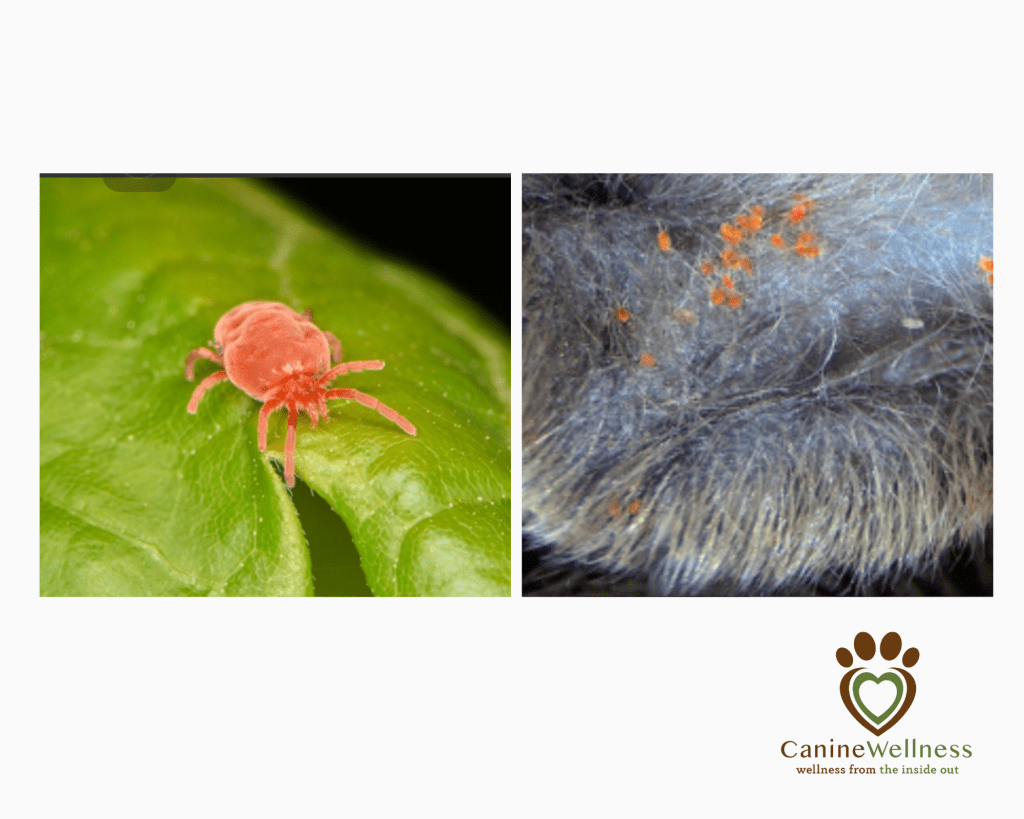
Harvest mites (Trombiculidae), also known as berry bugs, are tiny arachnid family members. They are red-orange in colour and are around when the temperatures over the summer are warm, as they prefer warm, dry weather. They are just 0.2mm in size and can be seen with the naked eye if you look closely, unlike other types of mites like sarcoptic mites and ear mites. Harvest mites live on your dog’s skin surface, while sarcoptic burrow into the epidermis. The larvae live on the skin until they grow into adults, so don’t panic; they won’t hang around for long. Usually, after three weeks, they remove themselves and, in the meantime, they cause your poor dog to become itchy and uncomfortable. Some dogs are susceptible to mites and can overreact to their presents. I deal with many dogs with this condition, and there are ways to support them without harsh chemicals. Read on to find out more.
Between the end of July and the beginning of October, they can be found in woodlands, long grass, low bushes, and plants. They are usually around the warmest time, midday, so early morning and evening walks can avoid them. If you have a dog that loves rolling around in the grass like my two dogs, beware! Regular checks after walks would be a good idea to keep on top of these little beasties. Regular brushing or using a lint roller may help when you return from your walks, and apply homemade apple cider vinegar and water spray just before you leave.
Where should we be checking?
They typically accumulate in areas such as the paws, between the toes, ears, front legs, armpits and tummies, but they can appear anywhere on the body.
Signs to look out for.
Intense scratching.
Rubbing or biting to relieve the itch.
Red patches of skin or hot spots.
Hair loss.
Naturally, if you take your dog to the vet, they will likely prescribe a range of products to kill off the mites, which contain ‘insect poisons’ or ‘pesticides’. Although there isn’t a prescribed treatment specifically for Harvest Mites, they will usually reach for one of the products listed below. All of which contain toxic ingredients such as Isoxazoline. Many dogs have severe adverse reactions to these, including seizures, muscle tremors, convulsions, skin disorders and even death. The U.S. Food and Drug Administration (FDA) has alerted pet owners and veterinarians about the potential for neurologic adverse events in dogs and cats treated with flea/tick products. Fact Sheet for Pet Owners FDA
These products include
Bravecto Fluralaner
Bravecto Plus Fluralaner/moxidectin
Nexgard Afoxolaner
Nexgard Spectra milbemycin oxime + Afoxolaner
Simparica Sarolaner
Revolution Plus Selamectin and Sarolaner
Simparica Triple Sarolaner Moxidectin
Frontline
Seresto, to name a few.
Of course, we don’t want our dogs to be uncomfortable, and the thought of them having these critters is unpleasant, but are they needed? You can find many distressing stories from pet owners here. Research yourselves to make an informed decision before using these products, and don’t blindly trust your vet. If you have had an adverse reaction to these products, please report it here. GOV.UK. Many herding breeds with the MDR1 gene, which are most commonly found in Collies and Australian Shepherds, make them more sensitive to the adverse effects of certain drugs, but any dog or cat has the potential to react. It is playing Russian roulette with your pet’s life.
Natural alternatives that may help your dog while dealing with harvest mites
Neem oil
Thornit powder
Green Clay
Apple cider vinegar
KG Pet Spray
Neem powder
Diatomaceous earth (DE)
Here I share my first-ever experience with harvest mites…
After a pleasurable walk surrounding a local golf course in mid-August 2022, my two dogs started nibbling their paws on our return. It was out of character for my younger dog Teddy so I knew something was irritating them both. It isn’t always easy checking curly-coated breeds (they are cockapoos), but after close inspection, I could see a cluster of what looked like orange dust. I tried to scrape it off with my nail, but it wouldn’t shift. I applied some Thornit powder, my best option while waiting for the Ekoneem Neem Oil to be delivered. I also tried neem powder mixed with a small amount of food-grade diatomaceous earth (DE) but still no luck. I rarely use DE on the skin as it can be drying and harmful if inhaled, so I applied it outside in the open.
I got to work straight away when the neem oil arrived. I used the oil twice daily. After three days, I hoped they would have gone at this stage. Teddy was clear, but Monty was still having issues. I continued for another two days to his affected paw and covered it using Pet wrap to stop him from licking and nibbling the area. After day 5, they were gone! Neem oil is very effective but be prepared. It has a smell you won’t forget! The pot is still in my fridge. I hope it won’t be needed this year. My fingers and toes are crossed! Yes, it was an inconvenience at the time and probably took longer than if I were to use chemicals. Still, I am happy to say natural alternatives work instead of using these unnecessary harmful products on our beloved dogs.
Many dogs dealing with inflammation are likely to be tormented by these mites or any mite, however a healthier dog may not be affected as much hence why Monty was affected more than Teddy. Every dog is different in this respect and will depend on the condition of their inner terrain. Suppose you have a sensitive dog and need help understanding this and managing their symptoms. Do you need guidance? Get in touch.
Thank you for reading.
Teresa
 Canine Wellness Specialist